 Itemlume
DIAGNOSTIC GUIDE / Logo studio
How do I test the reading order of a vertical Chinese wordmark?
A vertical wordmark can make the correct characters appear in an unintended reading order, especially with multiple columns. Prepare the actual layout and ask readers to write the name they see without prompting. Record column direction and intended sequence separately. Do not assume that an attractive stacked composition communicates the owner’s exact name or follows a universal platform preference.
Define the intended sequence before styling
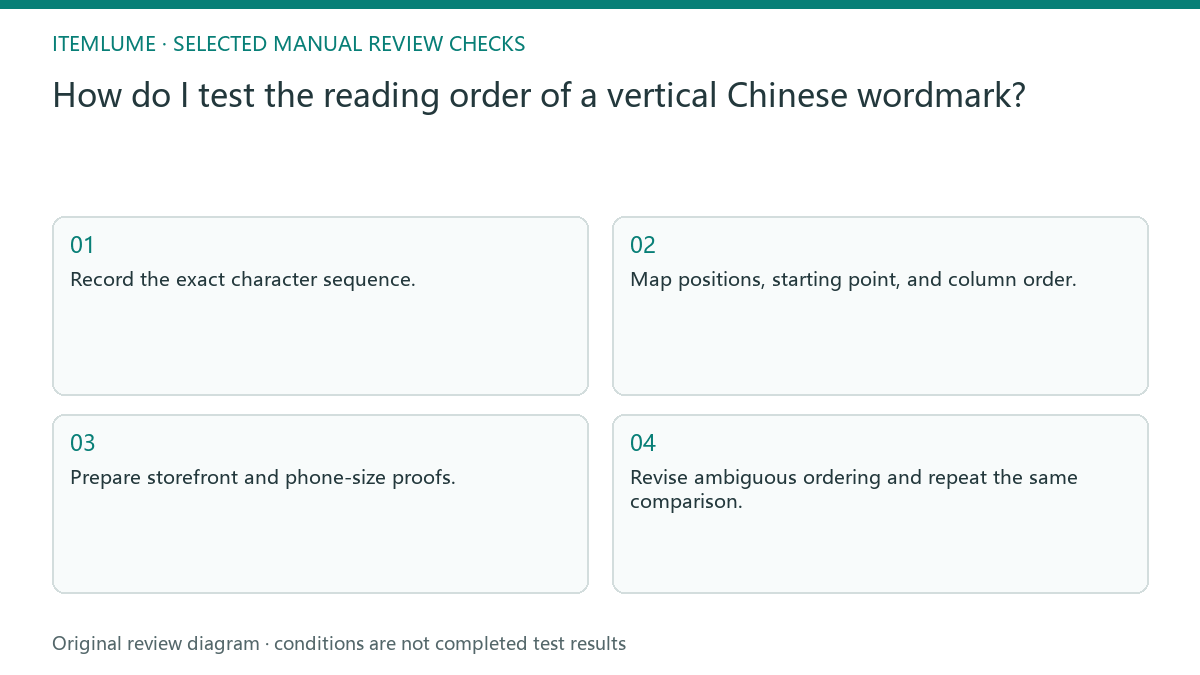
Record the brand name as an ordered text string. Draw a simple map assigning each character to a position and column. The map should specify where reading begins and how it continues, not just say vertical. A two-column composition can admit more than one plausible route.
Keep a horizontal text reference for the exact name while evaluating the vertical mark. This is a naming check, not an instruction that the horizontal layout is always better. The goal is to find whether the actual stacked arrangement communicates the approved sequence in its intended context.
Review sign and phone contexts separately
A storefront sign may be read while passing, while a phone avatar may crop the layout into a small square. Prepare those real applications and inspect margins, hierarchy, and column separation. A logo that reads correctly on a full design canvas may not retain the same cue in a thumbnail.
Ask appropriate readers to transcribe the visible name before showing the answer. Record each response and which application they saw. Avoid asking whether it is readable while presenting the correct name beside it. This exercise needs actual observations; do not invent a recognition percentage or claim that one arrangement is preferred by search algorithms.
- Record the exact character sequence.
- Map positions, starting point, and column order.
- Prepare storefront and phone-size proofs.
- Collect unprompted name transcriptions.
- Revise ambiguous ordering and repeat the same comparison.
A fictional four-character shop sign
Fictional exercise: a four-character name is placed in two columns. The designer intends readers to finish the first column before moving to the next, but the layout also encourages reading across rows. The review marks both possible paths and prepares a clearer single-column alternative. No actual reader study was performed.
If future readers produce the wrong sequence, change the column separation or arrangement rather than only explaining the intended rule. Compare the new proof in the same sign and phone contexts. Stop when the name still requires an explanation; the final asset should not depend on a private designer instruction.
Keep direction decisions attached to the delivered mark
Save the intended map and observed responses with the approved file. A later crop, border, or caption can remove the hierarchy cue that made the chosen version understandable. Recheck the final application after those changes instead of assuming recognition survives every placement.
Itemlume can explore logo compositions, but its raster concept does not provide a guaranteed reading order, editable typography, or trademark rights. External lettering may be needed for the final mark. Do not call a selected vertical version algorithm-friendly without evidence; approve it on the exact name and actual reader observations.
Reading-route review
| Application | Check | Approval evidence |
|---|---|---|
| Single vertical column | Top-to-bottom name sequence | Exact name transcribed |
| Two-column mark | Starting column and progression | No competing route confusion |
| Storefront proof | Viewing size and separation | Name read without explanation |
| Phone crop | Preserved hierarchy cues | Same sequence retained |
Use this matrix as a manual review record and add your own real evidence. Its conditions are not completed test results.
Sources and further reading
Sources for this page were checked on . Platform rules can change; verify the current source before publishing. Prompt examples and workflow recommendations are Itemlume editorial guidance, not independently measured results.
Frequently asked questions
Is vertical layout automatically clear?
No. Position and multiple columns can create competing reading routes.
Should I tell readers the intended direction?
Not during the first recognition check. Record what they read unprompted before explaining.
Does a preferred layout help AI ranking?
This review establishes no ranking effect. It concerns human name recognition and accurate brand presentation.
BUILD FROM A PRODUCT YOU KNOW
Put this workflow into practice with your own product.
Explore the relevant tool first. AI copy and concept planning are free after sign-in. Image and video generation require available credits and the applicable account access.
Open Logo studio Check pricing and credits