 Itemlume
DIAGNOSTIC GUIDE / A+ product pages
How do I write gift-product copy for the buyer without pretending to know the recipient?
Write separate answers for the purchaser and the recipient. The buyer needs to confirm ordering, wrapping and delivery facts; the recipient needs to understand the actual product’s use and limitations. Do not invent preferences or emotional outcomes to connect the two roles. One fact sheet can support two messages without inventing preferences or included services.
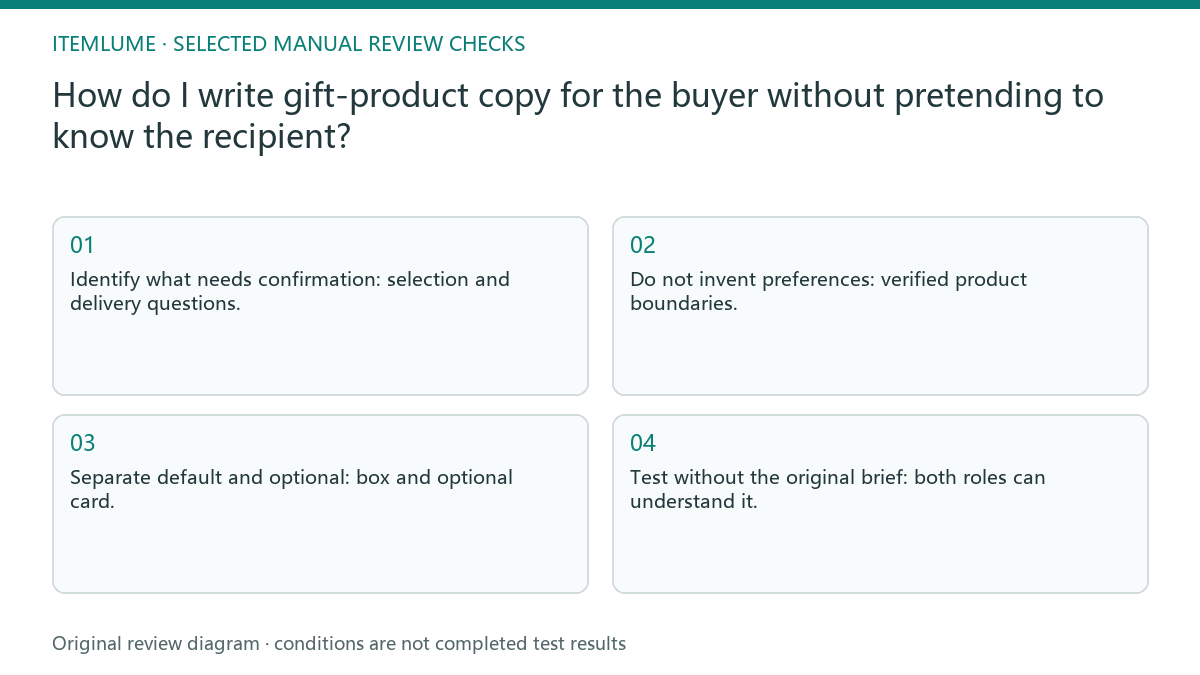
The gift buyer and recipient have different concerns
“Perfect for everyone” hides decisions a real gift buyer must make. An attractive lifestyle image does not establish the recipient’s size, taste or compatibility. Facts such as a supplied gift box, an optional message card and a confirmed dispatch route can help without pretending the seller knows who will receive the gift.
The buyer may need presentation, delivery and return facts, while the recipient needs the product’s actual use fit. Neither role proves the other’s preferences. A gift-focused scene should not imply that every age, relationship or occasion will welcome the item.
Build two messages from the same confirmed facts
Create a buyer checklist for selection and fulfillment, then a recipient checklist for supported use. Mark which facts are known before purchase and which require the buyer’s confirmation. Keep personal-message fields separate from product claims, and review copy with someone who has not seen the creative brief.
Make a two-column brief before writing the title. Put verified purchase logistics on the buyer side and supported product uses on the recipient side. Mark unsupported gift wrapping or arrival dates unresolved; a styled gift box is not proof those services are included.
- Identify what needs confirmation: selection and delivery questions.
- Do not invent preferences: verified product boundaries.
- Separate default and optional: box and optional card.
- Test without the original brief: both roles can understand it.
A fictional mug gift with an optional card
Fictional exercise: a mug gift includes a retail box but no personalized card by default. The buyer-facing block explains the card option; the recipient-facing block uses verified mug care information. Neither promises that a particular person will love it, and the gift scene does not silently add ribbon or flowers to the package.
For this fictional mug, the buyer message identifies the retail box and asks whether a personalized card is wanted. The recipient message stays with confirmed use and care information; it does not invent a dishwasher instruction or a preferred drink. If the buyer-facing line mentions a deadline, wrapping or the card, attach the seller’s actual service evidence. Remove the promise if none exists. Emotional gift positioning can remain expressive without inventing logistics or predicting that every recipient will be delighted.
Avoid invented reactions and delivery promises
Stop when suitability depends on an unknown recipient fact. Offer the buyer a concrete confirmation question instead of generating a universal gift recommendation.
Review the final creative for accidental promises: wrapping, accessories, setup or a guaranteed reaction. Remove any claim that is supported only by the staging. Itemlume text assistance can draft from the approved gift brief. Packaging, card personalization, dispatch promises and recipient consent must be handled by the actual seller.
Buyer task to final copy: decision worksheet
| Check | Evidence to record | Review action |
|---|---|---|
| Buyer task | Selection and delivery questions | Identify what needs confirmation |
| Recipient use | Verified product boundaries | Do not invent preferences |
| Package contents | Box and optional card | Separate default and optional |
| Final copy | Both roles can understand it | Test without the original brief |
Use this matrix as a manual review record and add your own real evidence. Its conditions are not completed test results.
Sources and further reading
Sources for this page were checked on . Platform rules can change; verify the current source before publishing. Prompt examples and workflow recommendations are Itemlume editorial guidance, not independently measured results.
Frequently asked questions
Should both audiences receive the same headline?
They can share facts, but buyer logistics and recipient use questions often need different emphasis.
Can a gift-box scene mean wrapping is included?
No. Confirm the seller’s actual service before making that promise.
Can AI predict that the recipient will love it?
No. Use supported suitability questions instead of guaranteed emotional reactions.
BUILD FROM A PRODUCT YOU KNOW
Put this workflow into practice with your own product.
Explore the relevant tool first. AI copy and concept planning are free after sign-in. Image and video generation require available credits and the applicable account access.
Open A+ product pages Check pricing and credits